
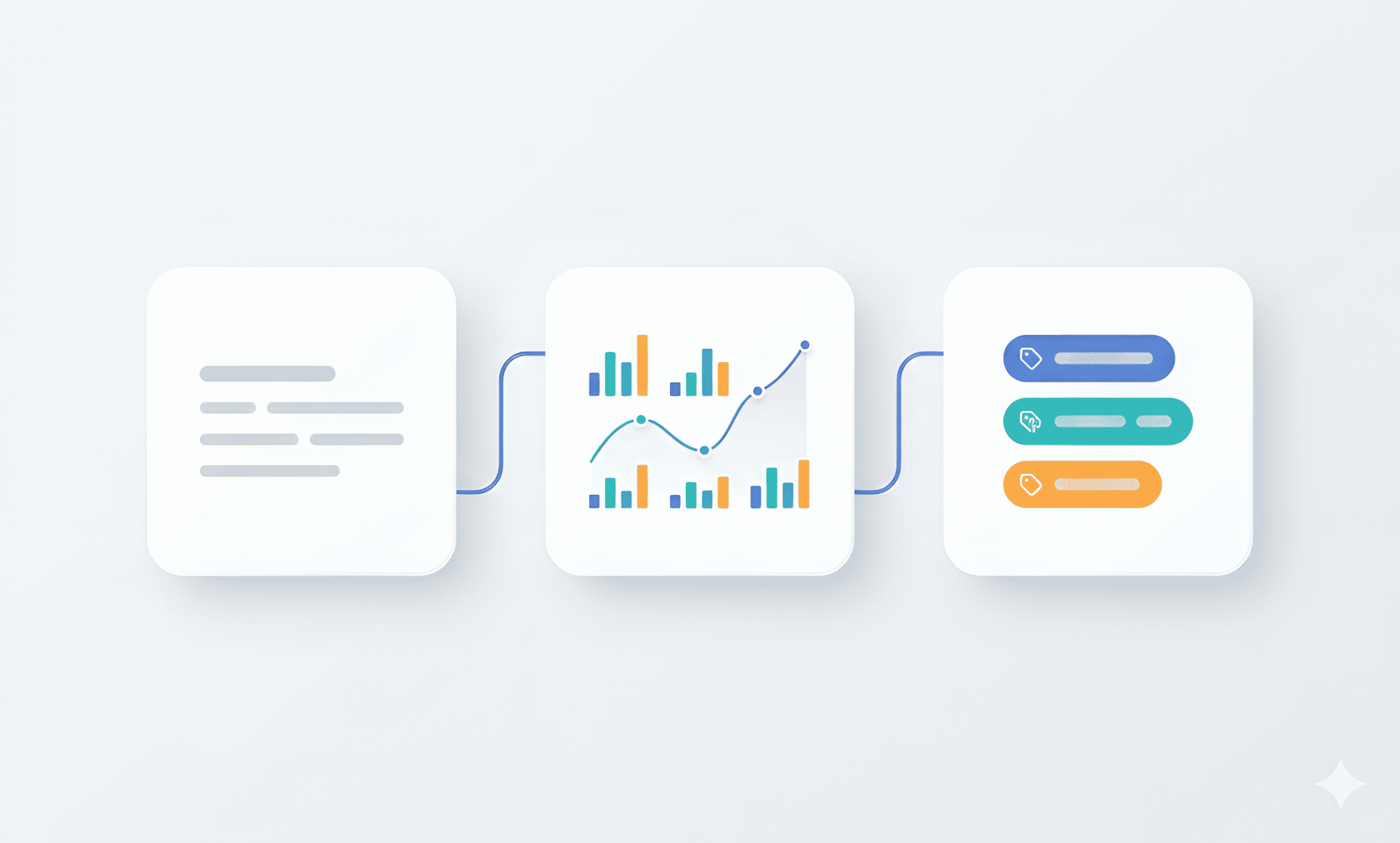
Attribution reporting shows which marketing channels, campaigns, and touchpoints contributed to a conversion. It turns customer journey and conversion tracking data into a structured view of how marketing influences outcomes such as purchases, signups, qualified leads, and demo requests.
Unlike standard channel reports, attribution reports do not evaluate each platform in isolation. They connect interactions across the journey, helping teams understand which channels create demand, which assist consideration, and which capture the final conversion.
How Attribution Reporting Works
Attribution reporting begins with recorded marketing interactions. These might include ad clicks, website visits, email engagements, content views, form submissions, sales calls, and CRM status changes.
An attribution model then determines how conversion credit is assigned to those touchpoints. A first-touch model credits the original interaction, while a last-touch model credits the final interaction before conversion. Multi-touch models distribute credit across several stages of the journey.
The resulting report helps marketers answer practical questions:
- Which channels influence the most conversions?
- Which campaigns assist conversions without receiving the final click?
- How do customers move between channels before converting?
- Would budget decisions change under a different attribution model?
This makes attribution reporting a practical application of marketing attribution, rather than simply another dashboard of clicks and impressions.
What an Attribution Report Should Include
A useful attribution report should connect marketing activity with measurable business outcomes. The exact metrics will depend on the business model, but most reports should include the following areas.
| Reporting area | What to include | Why it matters |
| Conversion performance | Conversions, conversion rate, revenue, cost per conversion | Shows which activity produces measurable outcomes |
| Channel and campaign results | Source, medium, campaign, ad group, creative | Identifies where performance is coming from |
| Customer touchpoints | First interaction, assisting interactions, final interaction | Shows how channels contribute throughout the journey |
| Attribution model | First-touch, last-touch, linear, time-decay, or another model | Explains how conversion credit was calculated |
| Conversion paths | Common channel sequences before conversion | Reveals how customers move between marketing activities |
| Business segments | Product, region, audience, pipeline, or customer type | Makes the findings more relevant to specific decisions |
Reports should also define what counts as a conversion. A marketing-qualified lead, completed purchase, booked meeting, and closed deal represent different stages and should not be combined without clear labeling.
What to Include in an Attribution Dashboard
An attribution dashboard should help users identify what happened, why it happened, and what action to take. Too many charts can make the dashboard harder to use, so each view should support a specific decision.
Conversion Performance by Channel
Show conversions, conversion rate, revenue, spend, and cost per conversion for each channel. This gives teams a quick view of which channels are producing outcomes efficiently.
Channel-level data should be interpreted carefully. A channel with a high cost per final conversion may still play an important role earlier in the customer journey.
Assisted Conversions
Include assisted conversions to show which channels contributed before the final interaction. This prevents teams from undervaluing channels that introduce prospects, build demand, or encourage return visits.
For example, paid social may introduce a customer who later converts through branded search. A last-touch report would credit search, while assisted conversion reporting would also reveal paid social’s influence.
Top Conversion Paths
Display the most common channel sequences before conversion, such as:
- Paid social → organic search → demo request
- Paid search → direct visit → purchase
- Organic content → email → sales call → closed deal
These paths make cross-channel attribution easier to understand and can reveal where customers commonly return, disengage, or convert.
Attribution Model Comparisons
Show how results change under different attribution models. A first-touch view may highlight acquisition channels, while a last-touch view may favor branded search, direct traffic, or email.
Comparing models helps teams understand how reporting assumptions affect budget conclusions. It also reduces the risk of treating one model as an unquestionable version of performance.
How to Improve Attribution Reporting Quality
Attribution reporting is only as reliable as the data supporting it. Standardize campaign naming, UTM parameters, conversion definitions, channel classifications, and reporting periods before comparing results.
Teams should also check for duplicate events, missing form submissions, unresolved direct traffic, and disconnected CRM outcomes. For businesses with long sales cycles, connecting marketing activity to qualified opportunities and revenue is often more useful than reporting only on initial leads.
Attribution reports should also include context. Seasonality, promotions, pricing changes, offline activity, and sales follow-up can influence performance even when they are not fully visible in the attribution data.
Common Attribution Reporting Mistakes
A common mistake is presenting attribution credit as proof that a channel caused a conversion. Attribution explains how credit is distributed across recorded touchpoints, but it does not automatically measure incrementality.
Another mistake is building a complex dashboard before agreeing on basic conversion definitions. Teams should first establish which outcomes matter, how they are tracked, and which attribution model supports the intended decision.
Where Attributy Fits
Attributy helps marketing teams bring campaign, customer journey, conversion, and revenue data into a clearer reporting environment. This allows teams to evaluate cross-channel performance, compare attribution perspectives, and make budget decisions with more complete information.
The goal is not to produce more reports. It is to create reporting that helps marketers understand performance, communicate marketing impact, and decide what to optimize next.