3 months ago
3 MIN READ
News, Blog, Case Studies, Onboarding Guides, Research

Attributy
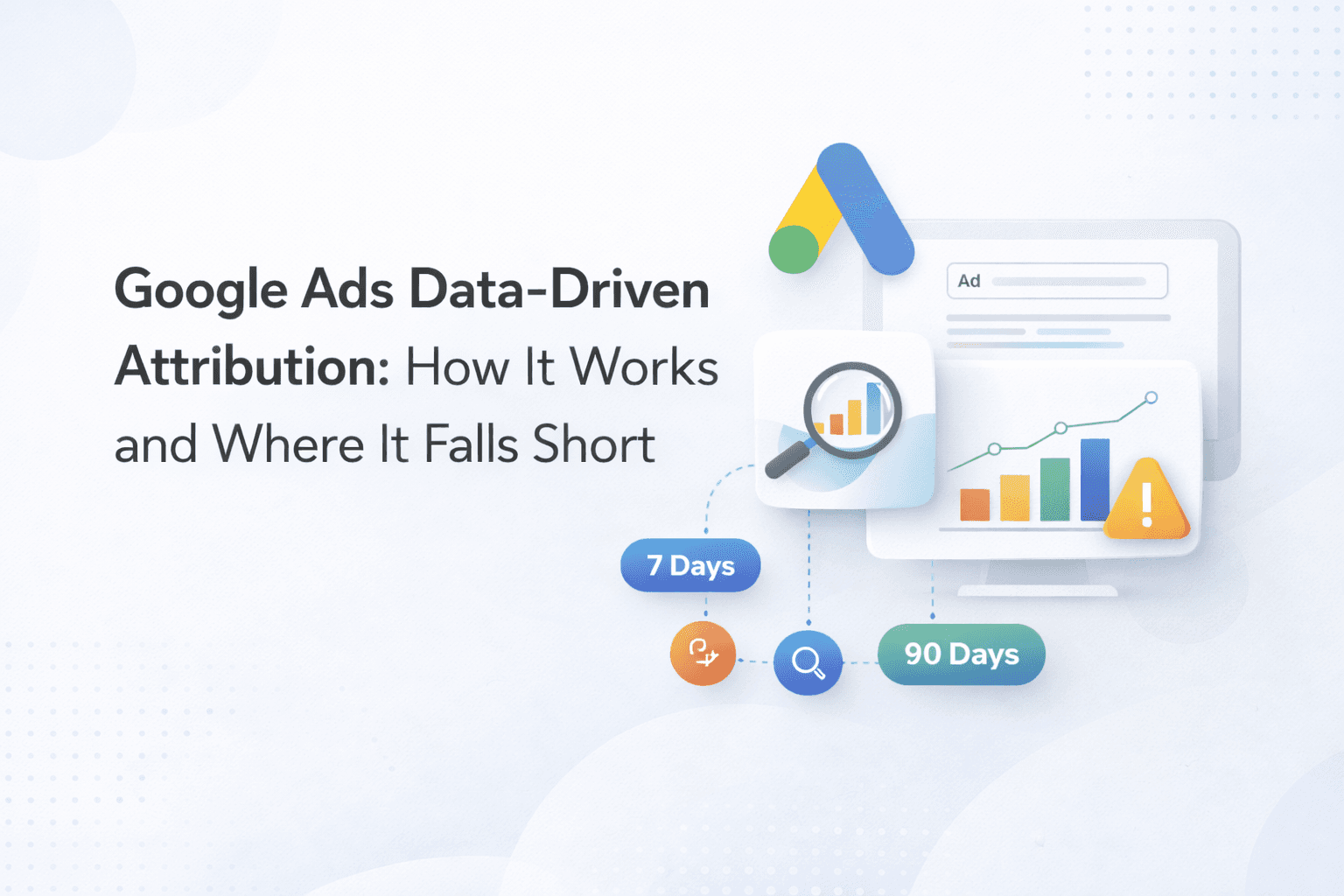
Data-driven attribution Google Ads is Google’s default attribution model for most conversion actions, and it is designed to assign conversion credit based on how different ad interactions contribute to a sale or lead instead of giving all credit to the final click. In practice, that makes it more useful than basic last-click reporting for advertisers who want a fuller view of what is driving performance. But it also has important limits. It works inside Google’s ecosystem, depends heavily on your conversion tracking quality, and still does not give marketers a complete picture of cross-channel influence.
In Google Ads, data-driven attribution uses your account’s historical conversion data to estimate how much each ad interaction contributed to a conversion. Instead of using a fixed rule like first-click or last-click, it looks at patterns in actual conversion paths and distributes credit across touchpoints based on their likely impact. Google states that the model uses data from your account to determine the contribution of keywords, ads, and campaigns, and that it can analyze conversions from Search, Shopping, YouTube, Display, Demand Gen, store visits, and certain Google Analytics conversions.
That is the main appeal of Google Ads attribution under a data-driven model. It reflects how real customer journeys often work. A buyer might first discover your brand through YouTube, later click a search ad, and finally convert after a branded search. A last-click model would often over-credit the final interaction. Data-driven attribution is meant to spread that credit more realistically across the path. Google also notes that its attribution reports are built to show how different ad interactions assist conversions, not just which one happened last.
For advertisers running multiple Google campaign types, that is a meaningful step forward. It can improve bidding inputs, shift budget away from channels that only look strong under last-click, and give a better view of upper- and mid-funnel influence. This is one reason Google positions data-driven attribution as a more advanced approach for optimization.
At a high level, Google’s system compares converting and non-converting paths to estimate how much each interaction changes the probability of conversion. In Google’s own Analytics documentation, the data-driven model assigns credit based on how the addition of each ad interaction changes the estimated probability of a key event. Google says factors can include timing, ad format, and other query signals.
For marketers, the practical takeaway is simple: the model is not just counting touches. It is weighting them.
That usually produces more nuanced attribution reporting than rules-based models:
| Attribution model | How credit is assigned | Main limitation |
|---|---|---|
| Last-click | Gives all credit to the final ad interaction | Ignores earlier influence |
| First-click | Gives all credit to the first interaction | Overstates acquisition touches |
| Linear or rule-based models | Splits credit according to a preset rule | Does not reflect actual account behavior |
| Data-driven attribution | Uses account data to estimate each touchpoint’s contribution | Depends on Google-visible data and tracking quality |
This is why many advertisers prefer data-driven attribution Google Ads over older attribution models. It is better aligned with how non-linear journeys happen in real campaigns, especially when users engage with multiple campaigns before converting.
The strongest case for using data-driven attribution in Google Ads is that it gives the platform a better signal for optimization than last-click reporting alone. When credit is distributed across the path, you can see more clearly which campaigns are introducing demand, which ones are assisting, and which ones are closing.
That matters for several common decisions:
First, it can improve bidding logic. If a campaign helps drive conversions earlier in the path but rarely gets final-click credit, last-click reporting may make it look weaker than it really is. Data-driven attribution can surface some of that value and reduce the chance of cutting important assist campaigns too aggressively. Google explicitly connects data-driven attribution with smarter optimization and a better view of interactions across campaigns.
Second, it can lead to more balanced budget allocation. Many accounts overinvest in bottom-funnel branded search because it captures final clicks. With data-driven attribution, marketers can often see that non-brand search, YouTube, or Display helped create the conversion path earlier.
Third, it can improve internal reporting quality inside Google Ads. If your team uses Google Ads attribution reports to understand path behavior, assisted conversions, or conversion lag, the data-driven model usually gives a more realistic story than last-click.
This is where many teams get overconfident.
Google Ads data-driven attribution is useful, but it is not the same thing as full-funnel, business-wide attribution. Its biggest limitation is scope. It measures what Google can observe and connect through its own ad interactions, conversion setup, and imported data. That means it is still a platform-centered view, not a complete measurement system for all marketing influence.
Here are the biggest gaps.
Google has expanded support for more campaign types, including YouTube and Display, and announced broader support for non-last-click models across these channels. That is a real improvement. But Google Ads attribution is still primarily designed to evaluate Google touchpoints and conversions available to Google Ads, not the full performance of every channel in your mix.
If paid social, email, organic search, affiliate, direct traffic, and CRM activity all influence conversion, Google Ads cannot give equal visibility across that entire journey on its own. For teams trying to understand total marketing impact, this is a major reporting limitation.
No attribution model can fix bad tracking. If your conversion tracking is incomplete, duplicated, misconfigured, or disconnected from real business outcomes, the model will optimize against flawed inputs. Google’s own setup documentation makes clear that advertisers need properly configured conversion actions, data sources, and reporting settings to measure outcomes accurately.
This matters more than many teams realize. For example, if you only track form fills but not qualified leads, pipeline progression, or offline sales outcomes, data-driven attribution may help you optimize for cheap conversions that do not create revenue. That is not a failure of the model alone. It is a failure of measurement design.
Google explains the logic at a high level, but most marketers do not get full transparency into exactly how much each signal influenced the model in their account. You can see the outcome in attribution reporting, but not a fully inspectable model like you might want in a deeper analytics environment.
For many teams, that creates a trust gap. You are expected to act on distributed credit without full visibility into every weighting decision behind it.
This is the biggest strategic misunderstanding. Some teams assume that because they use data-driven attribution in Google Ads, they have solved attribution. They have not.
They have improved Google Ads attribution.
That is valuable, but it is different from cross-channel attribution reporting. If your business runs Meta, LinkedIn, email, organic search, partner traffic, or offline sales processes, you still need a broader measurement approach to understand how all channels influence pipeline and revenue together. This is where a dedicated marketing attribution platform can add value by connecting spend, touchpoints, and outcomes beyond one ad ecosystem.
It is a strong fit when you run a meaningful share of your paid media in Google Ads, have solid conversion tracking in place, and want a better alternative to last-click attribution models. It is especially helpful for accounts using Search alongside YouTube, Display, Shopping, or Demand Gen, where multiple Google touchpoints influence the same conversion path.
It is less sufficient when your main challenge is proving performance across channels, aligning ad platform data with CRM outcomes, or understanding how top-funnel and offline activity affect revenue.
Google Ads data-driven attribution is a real upgrade over simplistic attribution models. It can produce better conversion tracking insights, more balanced Google Ads attribution, and smarter campaign optimization than last-click alone. But it should be treated as a better platform model, not as a complete source of truth.
For many marketers, the right approach is to use Google Ads data-driven attribution for in-platform optimization while relying on broader attribution reporting for channel-level and revenue-level decision making. If you are trying to connect Google Ads performance with the rest of your funnel, you can also request a demo to see how a broader attribution setup can fill in the gaps.
You can also read

4 days ago
3 MIN READ
Marketing Spend Optimization: How Attribution Improves Budget Decisions
Marketing spend optimization is the process of using performance data to decide where marketing budget should be increased, reduced, or reallocated. Instead of spreading spend evenly across channels, ...
Attributy
Learn
9 days ago
3 MIN READ
How Does Predictive Audience Targeting Improve ROI
Predictive audience targeting improves ROI by helping marketers focus budget on the users, leads, accounts, or segments most likely to convert. Instead of treating every audience member equally, predi ...
Attributy
Blog
12 days ago
3 MIN READ
What Is Marketing Mix Modeling (MMM)? Definition and Use Cases
Marketing mix modeling is a measurement method that analyzes how different marketing channels, external factors, and business conditions contribute to sales, revenue, or other outcomes over time. Ofte ...
Attributy
Learn
16 days ago
3 MIN READ
Lead Source Attribution: How to Track Leads from First Touch to Revenue
Lead source attribution is the process of identifying where a lead first came from and connecting that source to later pipeline, sales activity, and revenue. For marketing teams, it is one of the most ...
Attributy
Blog

18 days ago
3 MIN READ
Attribution Audit Checklist: Why Your Numbers Don’t Match
An attribution audit is a structured review of your tracking setup, attribution reporting, and conversion data to find why performance numbers differ across platforms. If Google Ads, GA4, Meta, CRM, a ...
Attributy
Learn
22 days ago
3 MIN READ
How to Build a Marketing Budget Plan Using ROI Signals
A marketing budget plan is a structured outline of how a business will allocate spending across campaigns, channels, tools, content, and experiments over a specific period. Instead of dividing money b ...
Attributy
Learn
26 days ago
3 MIN READ
Ad Spend Tracking: What Marketers Need to Measure
Ad spend tracking is the process of monitoring how much money your business spends on advertising and connecting that spend to measurable outcomes such as clicks, leads, conversions, revenue, marketin ...
Attributy
Learn
29 days ago
3 MIN READ
How Click Fraud Affects Attribution and Campaign Reporting
Click fraud attribution refers to the way fraudulent clicks distort how marketing teams assign credit to campaigns, channels, keywords, or ads. When fake clicks from bots, click farms, competitors, or ...
Attributy
Learn
1 month ago
3 MIN READ
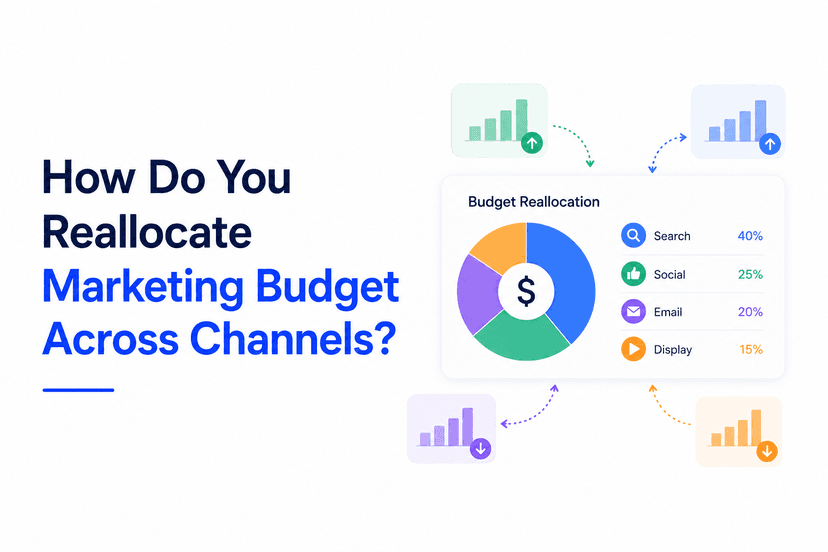
How Do You Reallocate Marketing Budget Across Channels?
You reallocate marketing budget by moving spend from lower-performing or saturated channels toward channels with stronger performance signals, better marginal returns, and more room to scale. The goal ...
Attributy
Learn
1 month ago
3 MIN READ
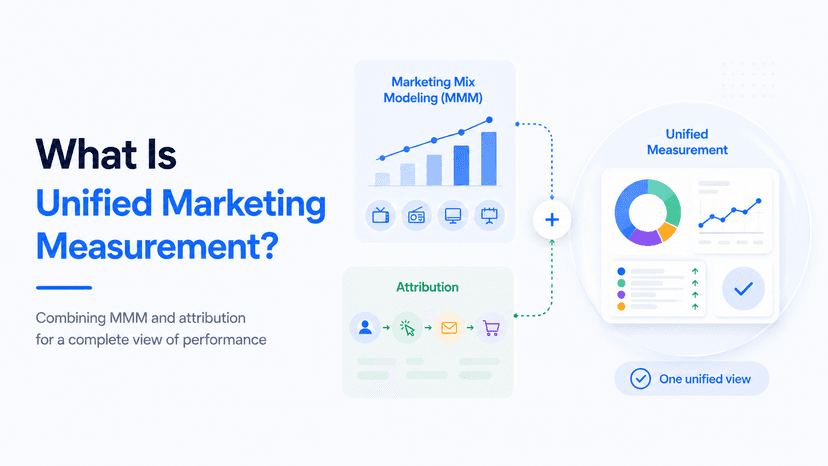
What Is Unified Marketing Measurement?
Unified marketing measurement is a marketing measurement framework that combines different data sources and methodologies to understand how marketing affects performance across channels, campaigns, an ...
Attributy
Learn
