
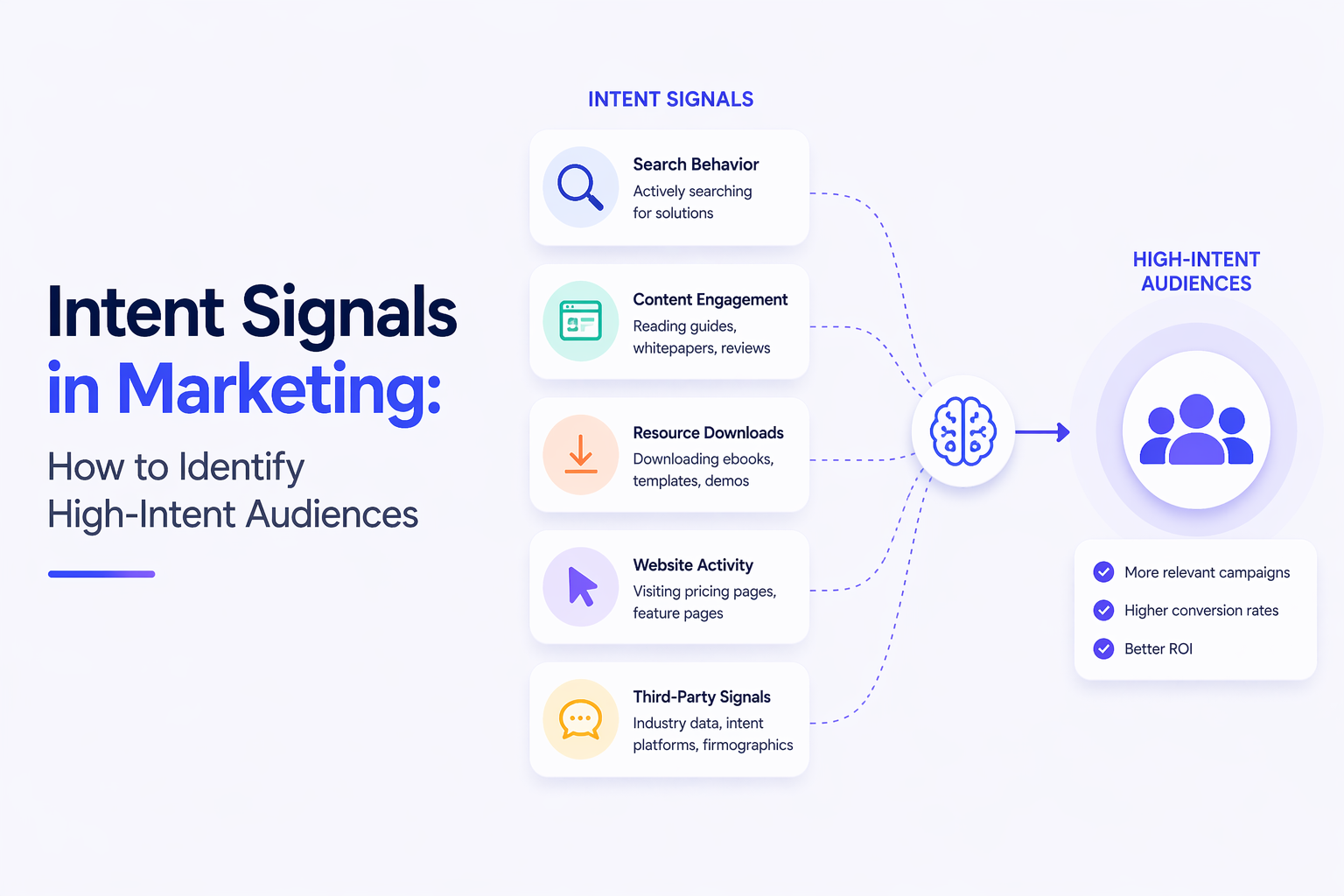
High intent audiences are groups of users who show clear signs that they are more likely to take a valuable action, such as requesting a demo, starting a trial, completing a purchase, or returning to compare solutions. In marketing, these audiences are identified through intent signals, audience scoring, and behavioral patterns that suggest stronger conversion likelihood than a general visitor or cold prospect.
Intent signals can come from many actions. A user who visits a pricing page, compares product features, returns multiple times from paid search, opens several lifecycle emails, or engages with bottom-funnel content is often showing more commercial intent than someone reading a broad educational article. These signals help marketers separate casual interest from active consideration.
For performance teams, identifying high intent audiences matters because it improves targeting, bidding optimization, and budget allocation. Instead of treating every visitor the same, marketers can build predictive segments based on behavior, source quality, campaign engagement, and conversion history. This makes it easier to prioritize the users and channels most likely to create pipeline or revenue.
How High Intent Audiences Are Identified
High intent audiences are usually identified by combining behavioral, contextual, and campaign-level data. A single action is rarely enough to prove intent, but multiple signals together can create a stronger picture of conversion likelihood.
Common intent signals include:
- Visiting pricing, demo, comparison, or checkout pages
- Returning to the site multiple times in a short period
- Engaging with product-focused content
- Clicking high-value ads or branded search results
- Starting but not completing a form or purchase
- Matching a high-value firmographic or customer profile
- Interacting with email, retargeting, or sales touchpoints
Audience scoring helps turn these signals into a practical system. For example, a pricing page visit may receive a higher score than a blog visit, while a demo page visit after a paid search click may increase the score further. This type of scoring can support predictive segments, retargeting lists, sales prioritization, and campaign optimization.
For teams using marketing attribution software, these signals become more useful when they are connected to actual conversion paths and channel performance. A high intent audience is not only about what users do, but also which campaigns, touchpoints, and sources consistently bring in users who convert.
How Marketers Use High Intent Audiences
Marketers use high intent audiences to improve the efficiency of campaigns and reduce wasted spend. In paid media, these audiences can support bidding optimization by helping platforms focus on users with stronger conversion likelihood. In lifecycle marketing, they can trigger more relevant nurture flows, demo prompts, or sales alerts.
The main mistake is assuming every intent signal has the same value. A user reading one article may be early in research, while someone returning to compare pricing and features may be much closer to action. This is why attribution reporting and conversion tracking are important. They help marketers see which signals actually correlate with conversions, not just clicks or page views.
High intent audiences should also be reviewed regularly. User behavior changes, campaigns shift, and predictive segments can become less accurate if they are not validated against real outcomes. When used carefully, high intent audiences help marketing teams prioritize the right users, improve targeting, and make smarter decisions about budget and follow-up.
To see how stronger attribution can help identify and act on high intent audiences, you can book a free demo.