3 months ago
3 MIN READ
News, Blog, Case Studies, Onboarding Guides, Research

Attributy
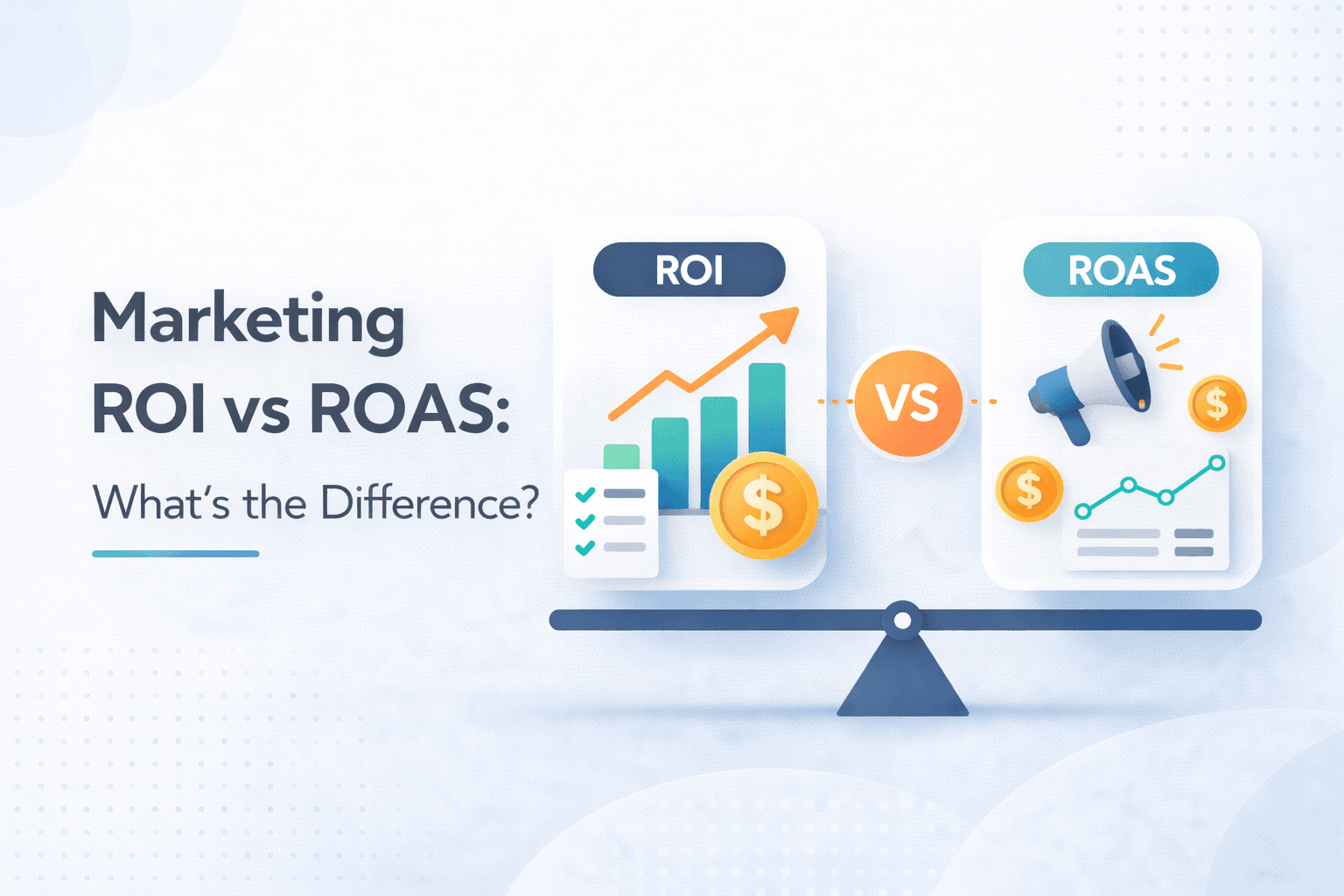
Marketing ROI and ROAS both measure marketing performance, but they answer different questions. ROAS shows how much revenue you generate for each dollar spent on advertising. Marketing ROI looks at profitability more broadly by comparing total marketing return against total marketing cost. In simple terms, ROAS is an efficiency metric for ad spend, while marketing ROI is a profitability metric for the full marketing investment.
ROAS stands for return on ad spend. The standard formula is:
ROAS = Revenue from ads / Ad spend
If you spend $1,000 on ads and generate $4,000 in revenue, your ROAS is 4:1. This makes ROAS useful for evaluating paid campaign efficiency, channel performance, and budget allocation across platforms.
Marketing ROI is broader. It usually includes more than media spend, such as creative costs, agency fees, software, and internal resources. A common formula is:
Marketing ROI = (Revenue – Marketing cost) / Marketing cost
Using the same example, if that $4,000 in revenue came from a campaign that cost $2,000 in total marketing expenses, your ROI would be 100%.
That is why ROAS can look strong while marketing ROI stays weak. A campaign may generate revenue efficiently from paid media alone, but once you include all associated costs, the profit picture changes. For teams focused on performance measurement, strong attribution reporting helps separate channel efficiency from true business impact.
Use ROAS when you want to understand how efficiently your ad spend is producing revenue. It is especially helpful for paid search, paid social, and ecommerce campaigns where media cost is the main variable.
Use marketing ROI when you need a more complete view of profitability. This is often more useful for B2B, longer sales cycles, multi-channel campaigns, or any situation where advertising is only one part of the total investment.
The mistake is treating them as interchangeable. ROAS is faster and easier to track, but it does not tell you whether marketing is actually profitable. Marketing ROI is more complete, but it depends on cleaner cost inputs and stronger attribution across touchpoints.
In practice, both metrics matter. ROAS helps optimize campaign execution. Marketing ROI helps evaluate whether the overall investment is worth it. If your team is trying to connect ad spend, conversion paths, and real business outcomes more clearly, you can request a demo to see how better attribution improves reporting.
You can also read

10 days ago
3 MIN READ
Ad Spend
What Is Ad Spend? Ad spend is the amount of money a business spends on advertising campaigns across channels such as paid search, paid social, display ads, video ads, marketplaces, and other media pla ...
Attributy
Blog

10 days ago
3 MIN READ
Attribution
What Is Attribution? Attribution is the process of identifying which marketing touchpoints influenced a conversion, lead, sale, or other business outcome. In marketing, attribution helps teams underst ...
Attributy
Glossary
18 days ago
3 MIN READ
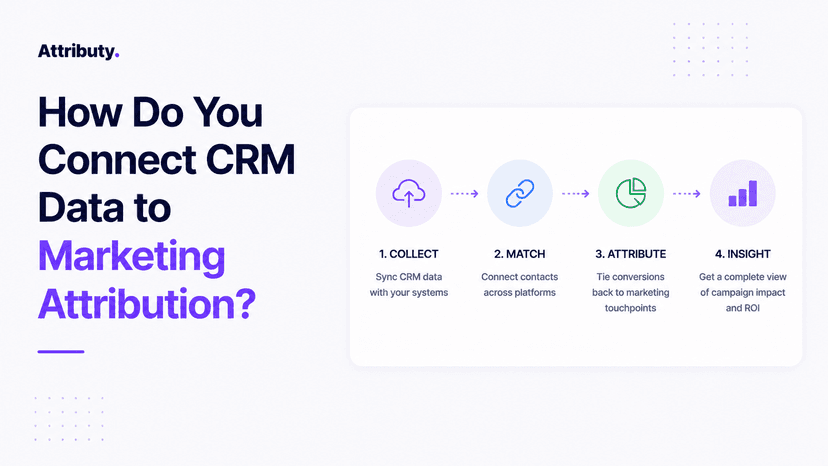
How Do You Connect CRM Data to Marketing Attribution?
Connecting crm to marketing attribution gives marketing and sales teams a clearer view of which campaigns, channels, and touchpoints influence pipeline and revenue. Without CRM data, attribution often ...
Attributy
Blog

24 days ago
3 MIN READ
Marketing Spend Optimization: How Attribution Improves Budget Decisions
Marketing spend optimization is the process of using performance data to decide where marketing budget should be increased, reduced, or reallocated. Instead of spreading spend evenly across channels, ...
Attributy
Learn

29 days ago
3 MIN READ
How Does Predictive Audience Targeting Improve ROI
Predictive audience targeting improves ROI by helping marketers focus budget on the users, leads, accounts, or segments most likely to convert. Instead of treating every audience member equally, predi ...
Attributy
Blog

1 month ago
3 MIN READ
What Is Marketing Mix Modeling (MMM)? Definition and Use Cases
Marketing mix modeling is a measurement method that analyzes how different marketing channels, external factors, and business conditions contribute to sales, revenue, or other outcomes over time. Ofte ...
Attributy
Glossary

1 month ago
3 MIN READ
Lead Source Attribution: How to Track Leads from First Touch to Revenue
Lead source attribution is the process of identifying where a lead first came from and connecting that source to later pipeline, sales activity, and revenue. For marketing teams, it is one of the most ...
Attributy
Blog

1 month ago
3 MIN READ
Attribution Audit Checklist: Why Your Numbers Don’t Match
An attribution audit is a structured review of your tracking setup, attribution reporting, and conversion data to find why performance numbers differ across platforms. If Google Ads, GA4, Meta, CRM, a ...
Attributy
Learn
1 month ago
3 MIN READ
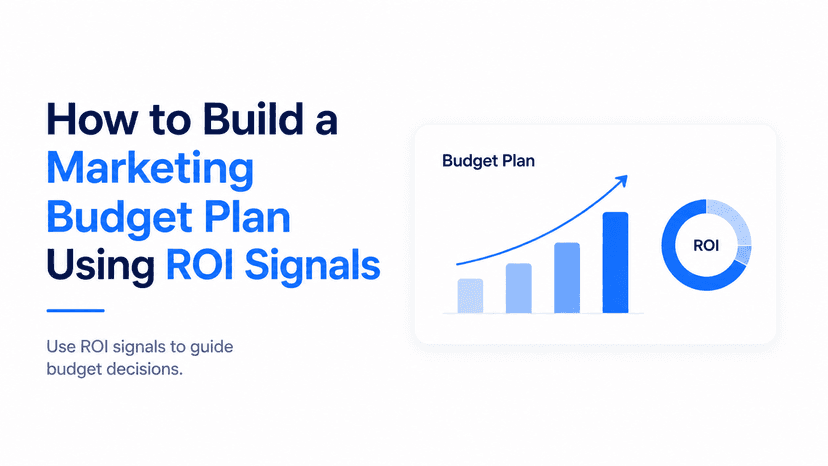
How to Build a Marketing Budget Plan Using ROI Signals
A marketing budget plan is a structured outline of how a business will allocate spending across campaigns, channels, tools, content, and experiments over a specific period. Instead of dividing money b ...
Attributy
Learn

2 months ago
3 MIN READ
Ad Spend Tracking: What Marketers Need to Measure
Ad spend tracking is the process of monitoring how much money your business spends on advertising and connecting that spend to measurable outcomes such as clicks, leads, conversions, revenue, marketin ...
Attributy
Learn
