
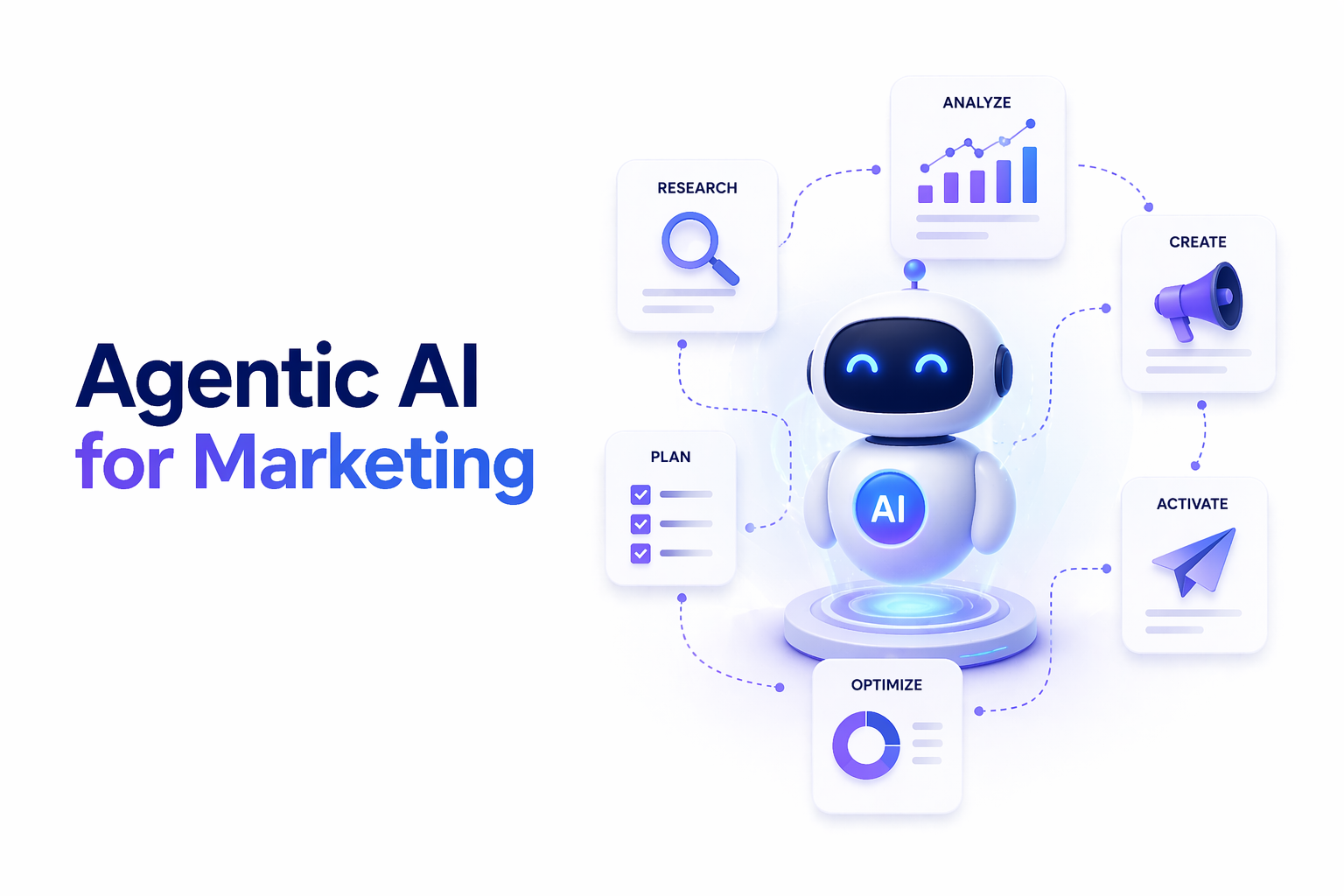
Agentic AI marketing optimization refers to AI systems that do more than generate reports or surface static insights. We use the term to describe systems that continuously monitor performance, detect meaningful changes, and recommend actions marketers can take to improve results. In practice, it sits between traditional marketing automation and more autonomous optimization, helping teams respond faster to changes in spend efficiency, audience behavior, and channel performance.
How We See Agentic AI Marketing Optimization Being Used
The main value of agentic AI in marketing is that it is proactive. Instead of waiting for someone to spot a problem inside a dashboard, it can surface recommendations as performance shifts in real time. That can include budget reallocation, targeting adjustments, frequency changes, or scenario planning before a team makes a media decision.
This matters most in environments where performance is spread across multiple channels and teams cannot rely only on static reporting. In those cases, continuous monitoring becomes much more useful than checking results after inefficiencies have already built up. Agentic AI can help marketers move faster, but its role should be to support better decisions, not replace decision-making altogether.
At Attributy, we position this as part of a broader measurement and optimization workflow. Our marketing attribution platform is built to help teams understand what is driving performance across channels, and our Agentic AI for continuous optimization and scenario planning is designed around continuous performance monitoring, real-time recommendations to reallocate spend, adjust targeting, or change frequency, and scenario simulations such as shifting 10% of budget from TV to Search.
The Limits and Risks We Think Marketers Should Understand
Agentic AI can improve speed and efficiency, but it does not remove the need for human judgment. Recommendations are only as strong as the data, tracking setup, and business goals behind them. If attribution is incomplete or the system is optimizing toward the wrong KPI, a marketer can end up scaling the wrong campaigns or mistaking short-term efficiency for real business impact.
We also see a governance risk. When teams rely too heavily on automation, they can stop questioning why a recommendation appeared in the first place. That becomes especially risky when budget reallocation affects channel mix, reporting, and downstream ROI.
Our view is that agentic AI works best as decision support, not blind autopilot. It becomes more valuable when paired with strong measurement, clear objectives, and visibility into full-funnel performance. Used well, it can help marketers act faster and test smarter. Used poorly, it can make weak measurement look more sophisticated than it really is.