
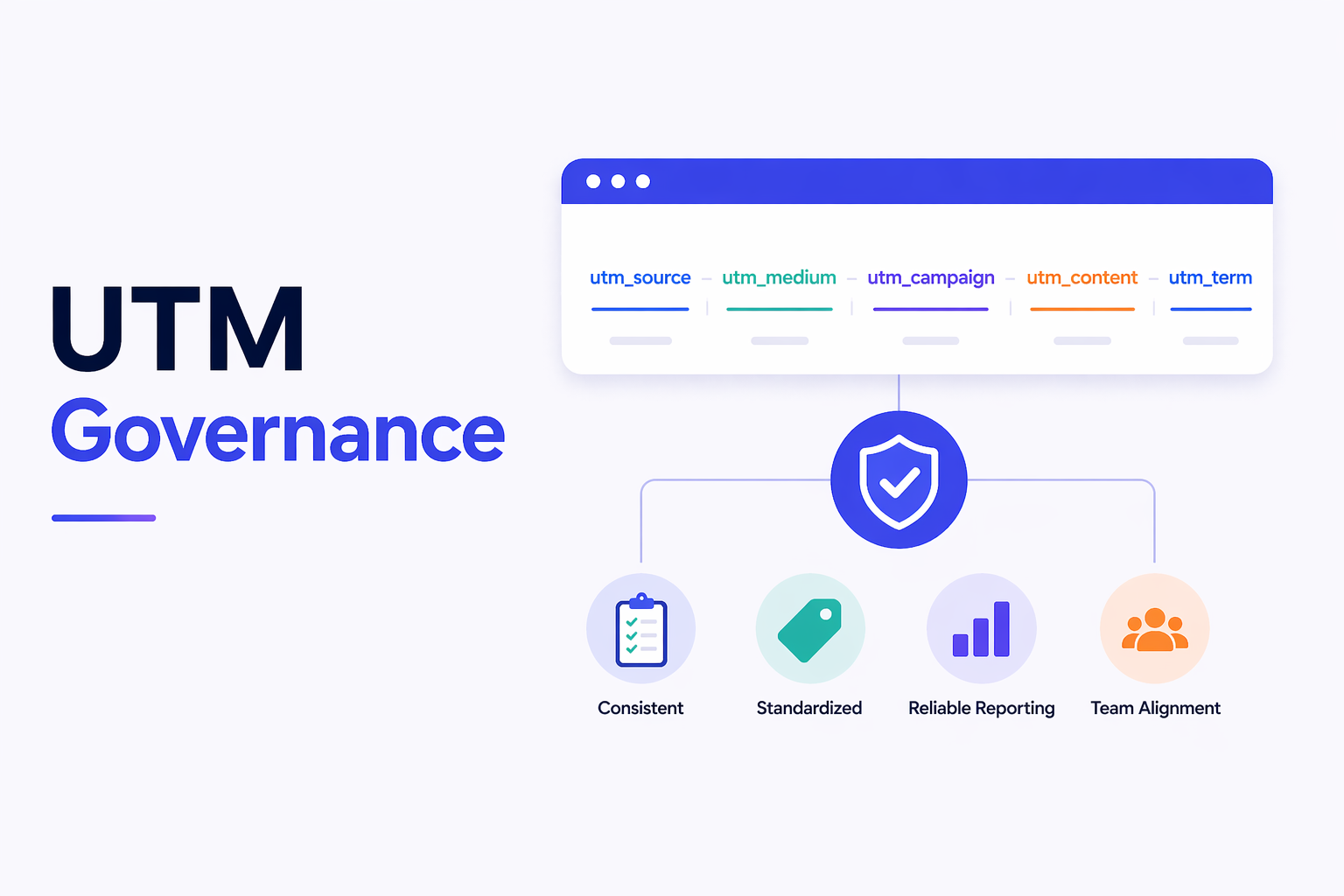
A strong UTM naming convention is one of the simplest ways to improve marketing data quality, but it is also one of the easiest things to get wrong. When teams use different spellings, inconsistent channel labels, or unclear campaign names, reporting starts to fragment. The result is messy attribution reporting, unreliable conversion tracking, and wasted time cleaning data after the fact.
That is why UTM governance matters. It gives your team a clear system for how UTM parameters should be created, reviewed, and maintained across campaigns. Instead of treating UTMs as a small tactical detail, governance treats them as part of your measurement infrastructure.
Why UTM governance matters more than most teams think
Most teams start using UTMs with good intentions. Someone creates a few links for paid social, someone else tags email campaigns, and another person uses their own naming logic for partnerships or influencer traffic. At first, this seems manageable. Over time, it creates reporting gaps.
A single campaign can end up split across multiple labels such as paid-social, paid_social, paidsocial, and social-paid. The traffic is technically tracked, but it is no longer grouped in a useful way. This affects channel reporting, campaign comparisons, and any downstream analysis tied to attribution.
UTM governance helps prevent that fragmentation by defining:
- which parameters your team uses
- how values should be formatted
- which naming patterns are allowed
- who is responsible for QA and upkeep
This is especially important when multiple teams touch the same campaigns, including paid media, lifecycle marketing, content, partnerships, and agencies. The larger the team, the more damaging small inconsistencies become.
Good governance also improves the value of your attribution reporting. If your campaign inputs are inconsistent, your outputs will be too. Even sophisticated models cannot fix broken naming logic at the source.
What a UTM naming convention should include
A UTM naming convention is not just a style guide. It is a structured framework for how campaign links are labeled so your data stays clean across platforms and reports.
The five standard UTM parameters are:
- utm_source: where the traffic comes from, such as google, linkedin, newsletter
- utm_medium: the marketing channel or tactic, such as cpc, paid_social, email
- utm_campaign: the campaign name, such as q3_demo_push or spring_sale
- utm_content: optional detail for creative, ad variant, or CTA
- utm_term: optional keyword-level detail, most often used in paid search
Not every business uses all five parameters equally, but every business should define rules for the ones it does use regularly.
A practical naming convention should answer questions like these:
How should values be formatted?
Teams should define whether UTMs use lowercase only, underscores instead of spaces, and a standard separator format. Lowercase is usually the safest choice because it reduces accidental duplication. For example, LinkedIn and linkedin may appear as separate values in some reporting environments.
What naming logic should campaigns follow?
Campaign names need a shared structure. A useful format might include elements such as region, audience, offer, and date or quarter. The goal is not to make names long. The goal is to make them readable and consistent enough that anyone reviewing the data understands what they mean.
For example:
utm_campaign=us_smb_demo_q3
utm_campaign=uk_retention_webinar_sep
This creates more useful reporting than vague names like summercampaign or launch1.
Which values are fixed versus flexible?
Some values should come from a controlled list. For example, your team may decide that utm_medium can only use approved values like cpc, email, paid_social, organic_social, or partner. Campaign names may allow more flexibility, but still within a defined structure.
This balance matters. Too much flexibility creates chaos. Too much rigidity makes adoption harder.
Common UTM mistakes that break reporting
Most broken UTM data comes from a few repeat problems.
Inconsistent channel naming
This is the most common issue. When one team uses social and another uses paid_social, channel-level reporting becomes less reliable. The same problem appears with email, partner traffic, and display campaigns.
Overly vague campaign names
A campaign name should be descriptive enough to support analysis later. Names like test, promo, or retargeting create confusion because they do not explain audience, offer, or context.
Missing governance across teams and vendors
Many companies define a naming document once, then fail to enforce it across agencies, freelancers, regional teams, or new hires. Governance only works when it is shared operationally, not just documented.
Using UTMs differently across platforms
Some teams tag paid social one way, email another way, and offline-to-online campaigns with no logic at all. That makes cross-channel reporting harder and weakens any attempt at cross-channel attribution.
No QA before launch
A campaign can have perfectly designed UTMs in theory and still go live with typos, broken links, or missing parameters. Without a QA step, preventable errors get baked into reporting.
How to build a UTM governance framework
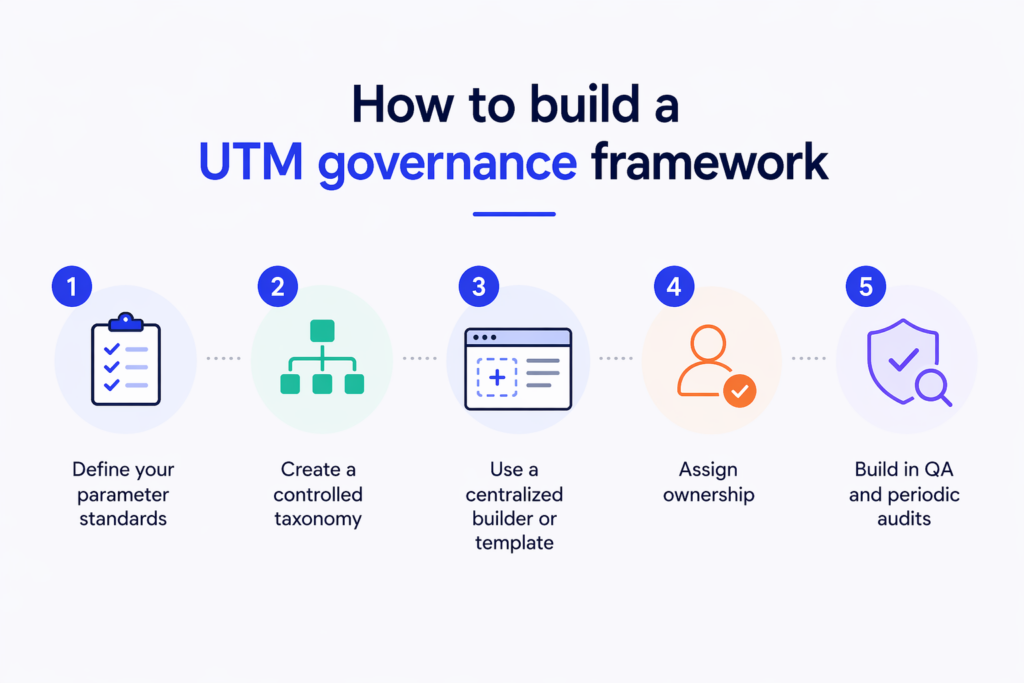
UTM governance should be simple enough for teams to follow and strong enough to protect reporting quality.
1. Define your parameter standards
Start by documenting which UTM parameters are required for each channel. For example, paid media may require source, medium, campaign, and content, while email may use source, medium, and campaign only.
Then define formatting rules such as:
- lowercase only
- no spaces
- approved separators
- no special characters unless necessary
- consistent date or quarter logic where relevant
2. Create a controlled taxonomy
Your taxonomy should standardize core fields like source and medium. This gives your team a shared measurement language. Campaign names can remain more custom, but they should follow a pattern.
A simple example:
| Parameter | Rule | Example |
| utm_source | platform or publisher name | |
| utm_medium | approved channel label | cpc |
| utm_campaign | structured campaign name | us_smb_demo_q3 |
| utm_content | creative or CTA variant | video_a |
| utm_term | keyword or audience detail if needed | crm_software |
This type of structure makes reporting cleaner and easier to scale.
3. Use a centralized builder or template
One of the fastest ways to reduce errors is to stop letting everyone create UTMs from scratch. A shared spreadsheet, internal builder, or campaign request form helps enforce standards before links are published.
This becomes even more important if you rely heavily on conversion tracking across multiple channels. The more links you publish, the more valuable standardization becomes.
4. Assign ownership
Someone needs to own the system. That does not mean one person creates every UTM. It means one team or role defines the rules, updates the taxonomy, and audits compliance over time.
Without ownership, governance usually fades into suggestion rather than process.
5. Build in QA and periodic audits
Governance is not a one-time setup. Teams change, campaigns evolve, and new channels appear. That is why periodic reviews matter. Look for duplicate mediums, inconsistent source names, missing parameters, and campaign names that no longer fit your standard.
If you care about reliable measurement, your data inputs should be reviewed with the same discipline as your dashboards.
How UTM governance supports better attribution and measurement
UTM governance does not replace attribution modeling, but it makes attribution more trustworthy. Clean UTMs improve the quality of channel grouping, campaign-level analysis, assisted conversion reporting, and ROI measurement.
For teams trying to understand which campaigns actually influence pipeline or revenue, data quality is not secondary. It is foundational. Broken tagging weakens every layer above it, whether you are analyzing first-click, multi-touch, or platform-reported performance.
That is one reason we see strong UTM governance as part of a broader measurement stack, not just a campaign ops task. Clean naming improves data consistency across analytics platforms, CRM reporting, and attribution workflows. If you are evaluating how your current setup handles campaign measurement, it also helps to review your broader marketing attribution software options.
A consistent naming system also makes it easier to compare performance over time. When campaign and channel labels stay stable, reporting becomes more useful for decision-making rather than just record-keeping.
Final thoughts
A UTM naming convention is only effective when it is backed by governance. The problem is rarely that teams do not use UTMs. The problem is that they use them inconsistently, without shared standards, QA, or ownership.
The best UTM governance systems are not overly complex. They are clear, documented, easy to follow, and enforced across the people who launch campaigns. When that happens, attribution reporting gets cleaner, conversion tracking becomes more dependable, and marketing teams spend less time fixing data after campaigns go live.
If you are working to improve campaign measurement and reporting discipline, it is worth looking at how Attributy approaches attribution and performance visibility across channels.