
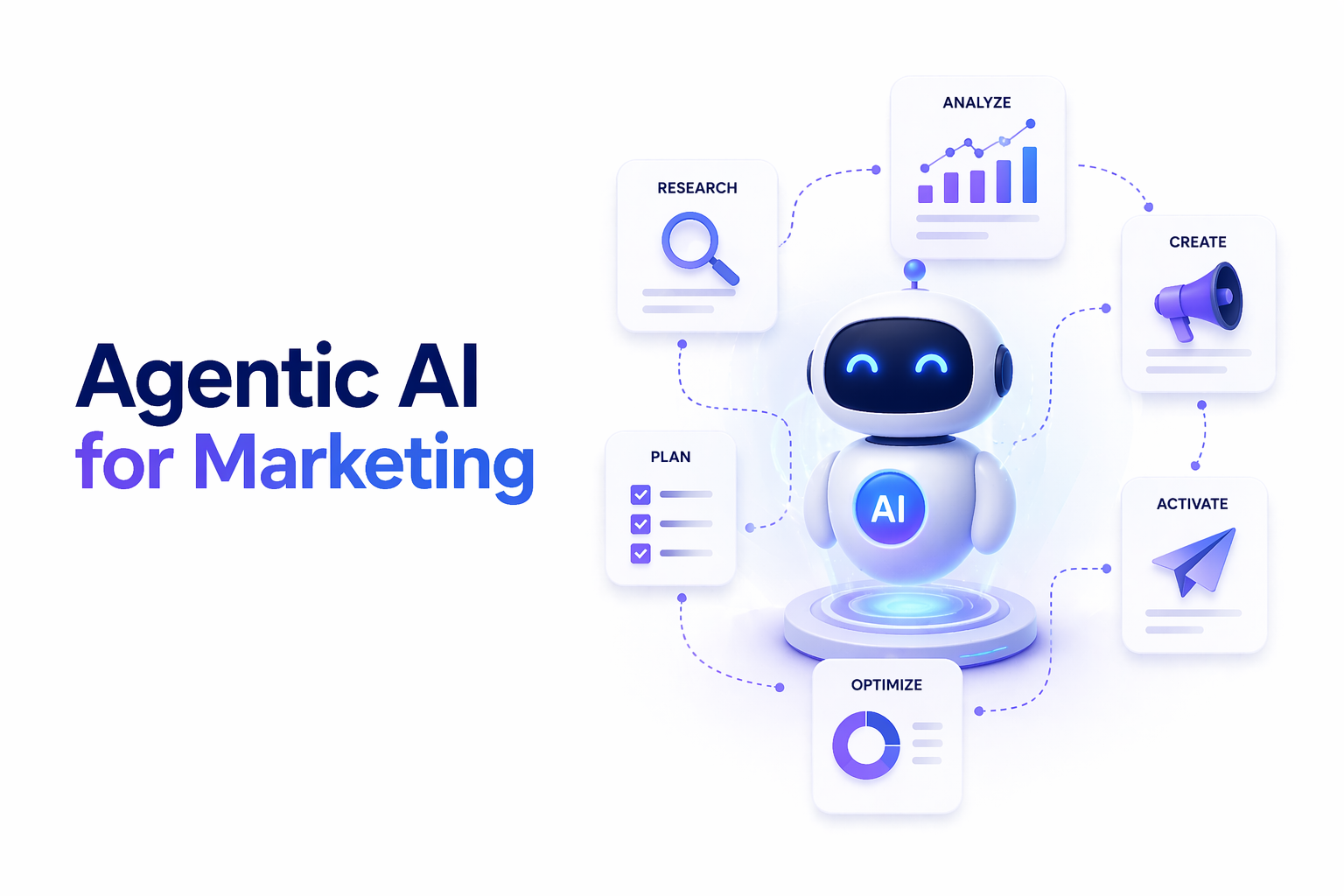
Agentic AI marketing optimization refers to AI systems that continuously monitor marketing performance, identify meaningful changes, and recommend actions marketers can take. Unlike a static dashboard or scheduled report, an agentic system is designed to evaluate new data and respond proactively.
In marketing, this may include recommending budget changes, identifying declining campaign efficiency, suggesting targeting adjustments, or testing how a proposed decision could affect performance. The objective is to help teams act faster, not to remove human oversight.
How Agentic AI Marketing Optimization Works
Agentic AI usually operates across four stages:
- Monitor performance data: The system reviews campaign spend, conversions, attribution results, audience activity, and other selected metrics.
- Detect changes or opportunities: It identifies unusual movement, emerging patterns, or performance gaps.
- Recommend an action: The system proposes a change, such as reallocating spend, adjusting frequency, or reviewing a weak audience segment.
- Measure the result: After a decision is implemented, the system continues monitoring whether performance improves.
The recommendations depend on the goals and data provided. If the system is instructed to optimize only for low-cost leads, it may favor campaigns that generate volume without producing qualified opportunities or revenue.
Agentic AI therefore works best when conversion definitions, attribution data, and business objectives are already clear.
Practical Agentic AI Marketing Use Cases
| Use case | Example recommendation | Human decision required |
| Budget monitoring | Move budget away from a campaign with declining conversion efficiency | Confirm whether the decline is temporary or strategic |
| Cross-channel optimization | Shift part of the budget from one channel to another | Review channel roles and assisted influence |
| Audience analysis | Increase investment in a segment with stronger conversion propensity | Check audience size, cost, and potential bias |
| Frequency management | Reduce exposure where ad frequency is rising without additional conversions | Consider campaign goals and creative fatigue |
| Scenario planning | Estimate the effect of reallocating 10% of the budget | Review assumptions before making the change |
| Performance alerts | Flag a sudden drop in conversions or increase in acquisition cost | Confirm whether tracking or campaign performance caused the change |
Scenario planning is particularly useful when teams want to evaluate a decision before implementing it. A structured marketing what-if scenario can compare possible outcomes while making the assumptions behind the recommendation more visible.
How to Use Agentic AI Safely
Start with one clearly defined decision process rather than allowing the system to optimize every campaign immediately.
For example, a team might begin by asking the system to flag campaigns where cost per qualified lead rises more than an agreed threshold. The marketer can then review the campaign before approving any budget change.
A practical workflow includes:
- Define the business outcome the system should support.
- Select the metrics it is allowed to use.
- Set limits on the recommendations it can make.
- Require human approval for material budget or targeting changes.
- Record which recommendations were accepted or rejected.
- Compare expected and actual performance after implementation.
This approach makes the system easier to evaluate and reduces the risk of automated decisions moving the team away from its broader strategy.
Agentic recommendations can also support marketing spend optimization when they are based on reliable conversion, cost, and attribution data rather than isolated platform metrics.
Limits and Risks Marketers Should Understand
Poor Data Quality
Agentic AI cannot correct every tracking problem automatically. Missing conversions, duplicate events, disconnected CRM records, and inconsistent campaign naming can lead to incorrect recommendations.
A system working from incomplete data may confidently suggest reducing a channel that is influencing pipeline but not receiving visible conversion credit.
Optimizing the Wrong KPI
The system may improve the metric it is given while harming another part of the business. Optimizing for low cost per lead can reduce lead quality, while optimizing only for immediate revenue may undervalue campaigns that create future demand.
Teams should define primary and secondary metrics before allowing the system to recommend changes.
Limited Context
AI may not understand upcoming promotions, inventory limits, sales capacity, brand priorities, market changes, or contractual commitments unless that information is included in the workflow.
Human review remains necessary when a recommendation affects strategy, customers, or significant budget.
Automation Bias
Marketers may accept recommendations because they appear data-driven, even when the logic or assumptions are unclear. Every recommendation should be explainable enough for the team to understand why it was produced.