28 days ago
3 MIN READ
News, Blog, Case Studies, Onboarding Guides, Research

Attributy
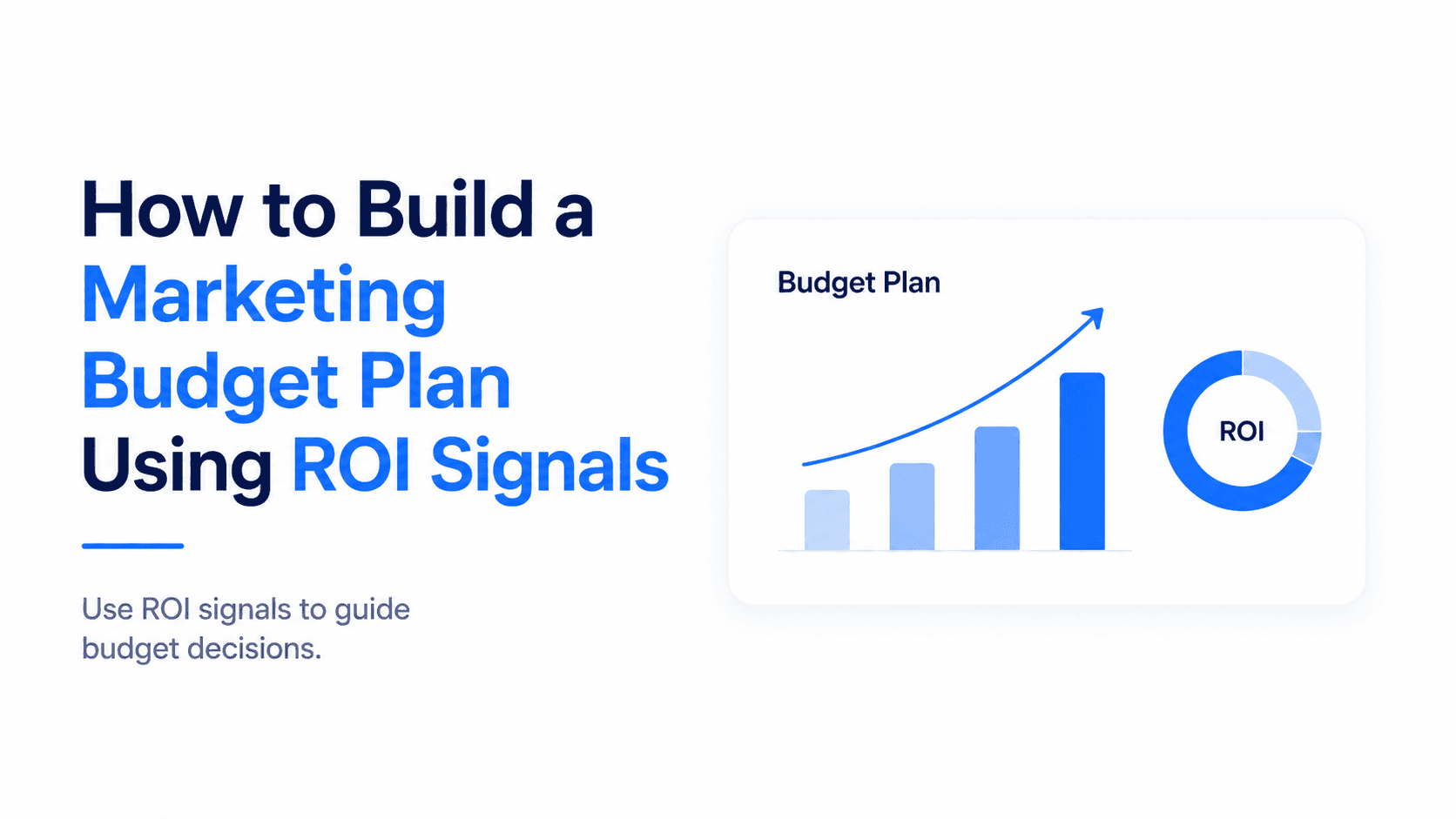
A marketing budget plan is a structured outline of how a business will allocate spending across campaigns, channels, tools, content, and experiments over a specific period. Instead of dividing money based only on last year’s spend or internal preferences, a stronger marketing budget plan uses ROI signals to decide where investment is most likely to create measurable growth.
ROI signals can include revenue influenced by each channel, customer acquisition cost, conversion rates, lead quality, pipeline contribution, payback period, and assisted conversions. For example, a paid search campaign may look expensive at first glance, but if attribution data shows it consistently supports high-value conversions, it may deserve more budget than a cheaper channel with lower-quality leads.
A marketing budget should not only answer “how much can we spend?” It should also answer “where will this spend create the best return?” ROI signals help teams move beyond basic cost tracking and build a more performance-driven budgeting process.
This is especially useful when teams need to compare channels with different roles. Paid social may create awareness, email may nurture demand, and search may capture high-intent buyers. Looking only at last-click performance can cause marketers to underfund channels that assist conversions earlier in the journey. Using a clearer attribution approach helps teams understand how each channel contributes before making budget decisions.
For deeper planning, marketers can use a marketing budget allocation framework to compare spend levels, performance trends, and growth opportunities across channels. Teams should also understand marketing ROI so budget decisions are tied to business outcomes rather than surface-level metrics.
Start by reviewing current marketing budget data, including total spend, channel-level spend, campaign performance, conversion quality, and revenue impact. This gives you a baseline before making changes. A simple budgeting template should include planned spend, actual spend, target ROI, expected conversions, cost per acquisition, and notes on performance assumptions.
Next, group your budget into core categories such as proven channels, growth experiments, content and creative, marketing tools, and contingency funds. Proven channels should receive enough investment to maintain performance, while experimental budget should be limited and measured against clear success criteria.
Then, review marketing budget allocation regularly. Strong plans are not static. If one channel shows rising acquisition costs or declining conversion quality, budget may need to shift. If another channel produces better-fit leads or stronger assisted conversions, it may deserve more investment. Teams that want help connecting spend, attribution, and reporting can also contact Attributy to discuss how better measurement can support budget planning.
A good marketing budget plan balances discipline with flexibility. It gives teams a clear spending structure, but it also leaves room to reallocate budget when ROI signals show a better path to growth.
You can also read
3 days ago
3 MIN READ
How Do You Connect CRM Data to Marketing Attribution?
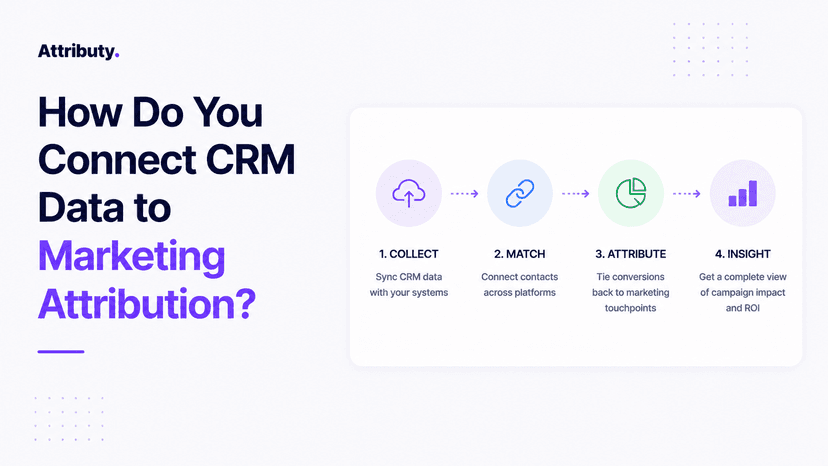
How Do You Connect CRM Data to Marketing Attribution? Connecting crm to marketing attribution gives marketing and sales teams a clearer view of which campaigns, channels, and touchpoints influence pip ...
Attributy
Blog

9 days ago
3 MIN READ
Marketing Spend Optimization: How Attribution Improves Budget Decisions
Marketing spend optimization is the process of using performance data to decide where marketing budget should be increased, reduced, or reallocated. Instead of spreading spend evenly across channels, ...
Attributy
Learn

14 days ago
3 MIN READ
How Does Predictive Audience Targeting Improve ROI
Predictive audience targeting improves ROI by helping marketers focus budget on the users, leads, accounts, or segments most likely to convert. Instead of treating every audience member equally, predi ...
Attributy
Blog

17 days ago
3 MIN READ
What Is Marketing Mix Modeling (MMM)? Definition and Use Cases
Marketing mix modeling is a measurement method that analyzes how different marketing channels, external factors, and business conditions contribute to sales, revenue, or other outcomes over time. Ofte ...
Attributy
Learn

22 days ago
3 MIN READ
Lead Source Attribution: How to Track Leads from First Touch to Revenue
Lead source attribution is the process of identifying where a lead first came from and connecting that source to later pipeline, sales activity, and revenue. For marketing teams, it is one of the most ...
Attributy
Blog

23 days ago
3 MIN READ
Attribution Audit Checklist: Why Your Numbers Don’t Match
An attribution audit is a structured review of your tracking setup, attribution reporting, and conversion data to find why performance numbers differ across platforms. If Google Ads, GA4, Meta, CRM, a ...
Attributy
Learn

1 month ago
3 MIN READ
Ad Spend Tracking: What Marketers Need to Measure
Ad spend tracking is the process of monitoring how much money your business spends on advertising and connecting that spend to measurable outcomes such as clicks, leads, conversions, revenue, marketin ...
Attributy
Learn

1 month ago
3 MIN READ
How Click Fraud Affects Attribution and Campaign Reporting
Click fraud attribution refers to the way fraudulent clicks distort how marketing teams assign credit to campaigns, channels, keywords, or ads. When fake clicks from bots, click farms, competitors, or ...
Attributy
Learn
1 month ago
3 MIN READ
How Do You Reallocate Marketing Budget Across Channels?
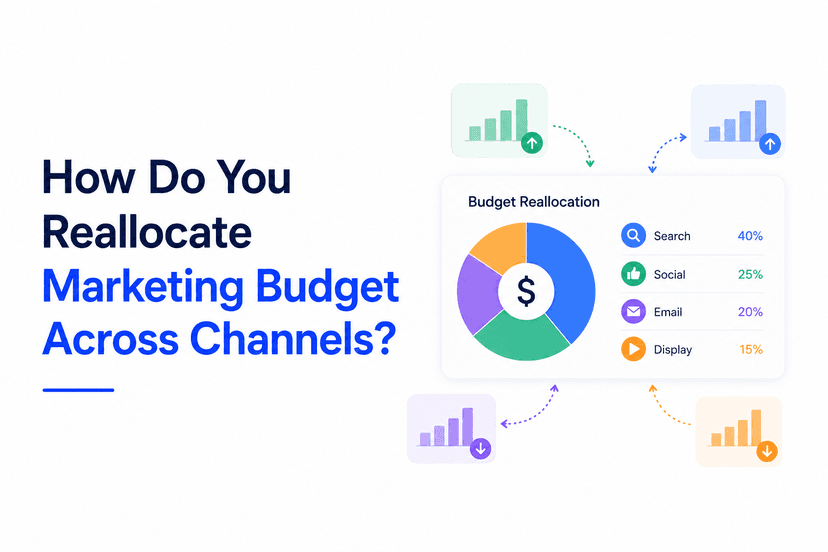
You reallocate marketing budget by moving spend from lower-performing or saturated channels toward channels with stronger performance signals, better marginal returns, and more room to scale. The goal ...
Attributy
Learn
