
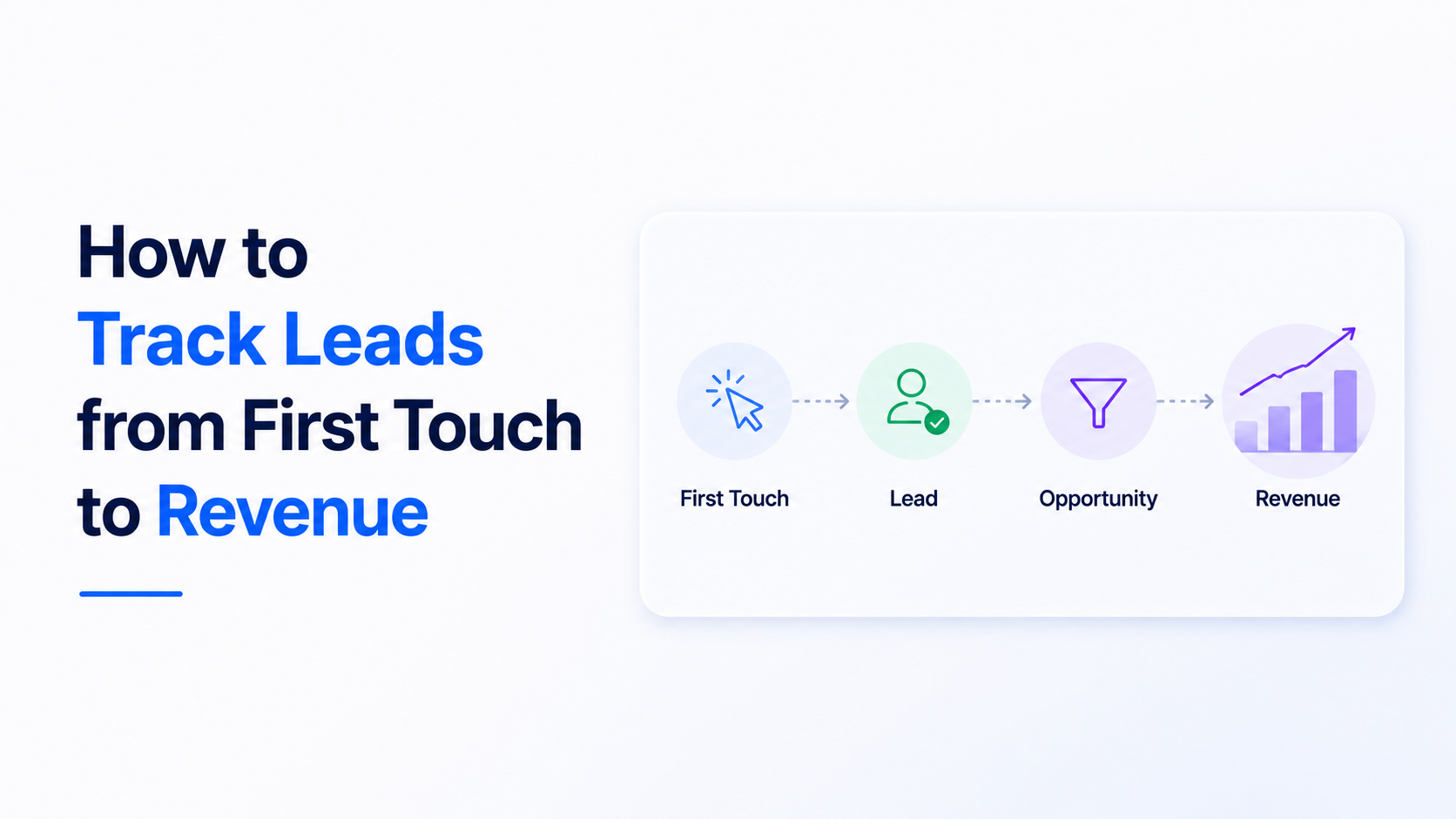
Lead source attribution is the process of identifying where a lead first came from and connecting that source to later pipeline, sales activity, and revenue. For marketing teams, it is one of the most practical forms of marketing attribution because it shows whether campaigns are only generating leads or actually contributing to business outcomes.
This matters because lead volume can be misleading. A channel may produce a high number of form fills, but those leads may never become qualified opportunities. Another channel may generate fewer leads, but those leads may move through the CRM faster, close at a higher rate, and produce more revenue. Lead source attribution helps teams see that difference clearly.
What Is Lead Source Attribution?
Lead source attribution tracks the original source, campaign, or channel that introduced a lead to your business. In a CRM, this is often captured as a lead source field, such as organic search, paid search, paid social, referral, direct traffic, email, event, partner, or outbound.
The basic idea is simple, but the execution is often messy. A buyer may first discover your company through a LinkedIn ad, return later through a Google search, click a retargeting ad, and finally request a demo after visiting a product page. If your reporting only records the last form submission, you may miss the earlier touchpoints that helped create the opportunity.
That is why lead source attribution should not be treated as a single CRM dropdown. It works best when website tracking, UTM parameters, forms, CRM fields, and revenue data are connected in a consistent way. For teams still building the foundation, it helps to start with a clear understanding of marketing attribution before choosing which model or report to rely on.
Why Lead Source Attribution Matters
Lead source attribution helps marketers understand which channels create meaningful demand, not just activity. Without it, teams often make decisions based on surface-level metrics like clicks, impressions, sessions, or cost per lead.
Those metrics are useful, but they do not show whether a lead became qualified, entered the sales pipeline, or closed as revenue. A campaign with a low cost per lead may look efficient until the CRM shows that those leads rarely convert. A campaign with a higher cost per lead may be more profitable if it creates stronger opportunities.
This is especially important for B2B, SaaS, ecommerce lead generation, and service businesses with longer buying journeys. When sales cycles include multiple sessions, decision makers, and follow-ups, the first lead source is only one part of the story. Still, it gives teams a critical starting point for understanding where demand begins.
First Touch, Last Touch, and Multi-Touch Lead Attribution
First touch attribution gives credit to the original source that brought the lead to your website or brand. If someone first arrived through organic search, then later converted after clicking a paid ad, first touch attribution credits organic search.
Last touch attribution gives credit to the final source before the conversion. In that same example, paid search would receive the credit because it drove the form submission or demo request. This can be useful when you want to know which channels are most effective at converting existing demand.
Multi-touch attribution gives a broader view by considering several interactions across the customer journey. It is often more realistic for complex buying journeys because buyers rarely move from first visit to purchase in one step. If your team is comparing different ways to assign credit, this guide on first click, last click, and multi-touch attribution models explains the tradeoffs in more detail.
The right model depends on the question you are trying to answer. First touch is useful for understanding demand creation. Last touch helps identify conversion drivers. Multi-touch attribution is better when you need to understand how channels work together before a lead becomes revenue.
How to Track Leads from First Touch to Revenue
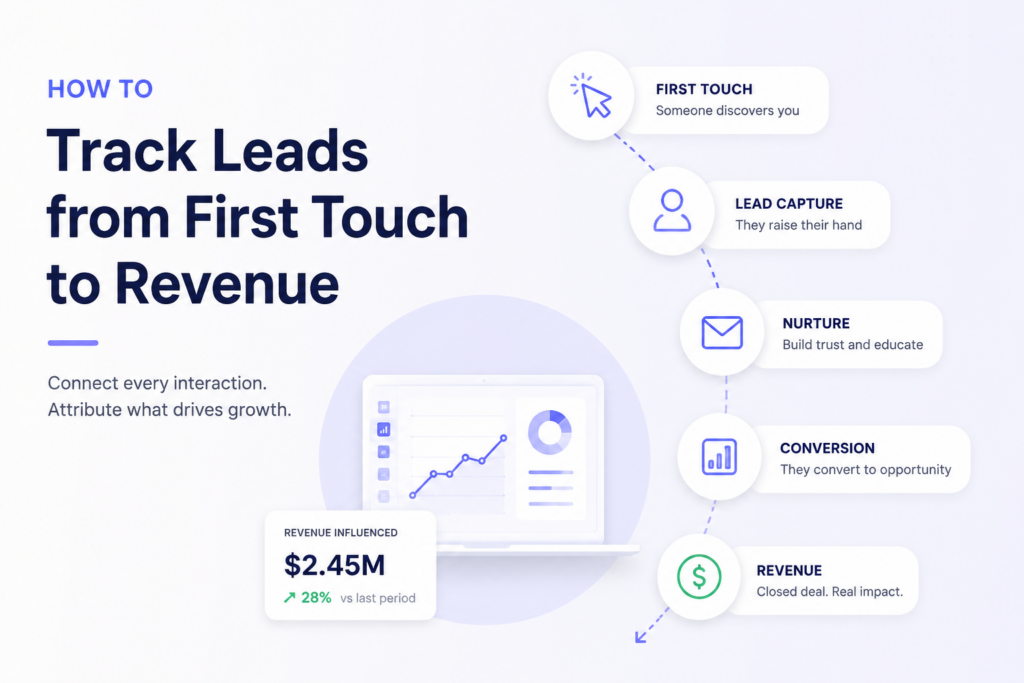
Tracking lead source attribution properly means following the lead from the first website visit through the CRM and into revenue reporting. The goal is not only to know where a lead came from, but also whether that source created a pipeline, customers, and return on investment.
Capture the first source before the lead converts
The first step is capturing source data when a visitor arrives on your website. This usually includes source, medium, campaign, landing page, referrer, and UTM parameters. If this information is not captured early, it may be lost or overwritten before the person fills out a form.
UTM consistency is especially important for paid media, email, partner campaigns, and any channel where you control the link. If teams use different naming styles across campaigns, reporting becomes fragmented very quickly. A practical UTM governance system can help prevent small naming mistakes from creating major reporting problems later.
Pass attribution data into forms and the CRM
Once the original source is captured, it needs to pass into your forms and CRM. This is often done through hidden form fields that store data such as original source, original medium, original campaign, latest source, latest campaign, first landing page, and conversion page.
This step is where many teams lose attribution accuracy. The website may capture source data, but the form may not pass it into the CRM. The CRM may store a lead source, but not the campaign that created the lead. A sales rep may also overwrite a field manually, which can remove the original marketing source from the record.
To avoid this, teams need clear rules for how attribution fields are created, updated, and protected. Original source fields should usually remain stable, while latest source fields can update as the lead returns through new channels. This gives marketers a clearer view of both the first touch and the most recent conversion touch.
Connect lead source to lifecycle stages
Lead source attribution becomes much more useful when it is connected to lifecycle stages. A lead may become a marketing qualified lead, sales qualified lead, opportunity, customer, or expansion account. Each stage adds more context about the quality of the original source.
For example, a paid social campaign may create a large number of leads, but only a small percentage may become sales qualified. Organic search may create fewer leads, but those leads may become opportunities at a stronger rate because they entered through high-intent content. Without lifecycle reporting, both channels may be judged only by lead volume.
This is where attribution reporting becomes more valuable than a basic lead source report. Instead of asking which channel produced the most leads, the team can ask which sources produced qualified pipeline and revenue.
Tie CRM revenue back to the source
The final step is connecting closed-won revenue back to the original lead source and related marketing touches. This allows the team to compare channels based on business impact, not just campaign activity.
A useful report should show leads, qualified leads, opportunities, pipeline value, closed-won revenue, win rate, sales cycle length, and cost per customer by source. These metrics help marketers see whether a channel is creating efficient growth or only creating top-of-funnel volume.
This is also where conversion tracking needs to go beyond simple website events. Demo requests, booked calls, opportunities, offline sales, and closed deals should all be part of the measurement process where possible. If your team is evaluating tracking tools, this guide to conversion tracking software explains what to consider when connecting marketing activity to business outcomes.
Common Lead Source Attribution Mistakes
One common mistake is using one field to explain the entire buyer journey. A single lead source field can show where a lead began, but it cannot explain every interaction that influenced the conversion. Teams often need original source, latest source, campaign data, and touchpoint history to get a more complete view.
Another mistake is mixing different types of data in the same field. “Google Ads,” “demo request,” “inbound,” and “ebook download” do not describe the same thing. One is a channel, one is a conversion type, one is a motion, and one is a content asset. When these values are mixed together, attribution reporting becomes hard to trust.
Teams also run into problems when CRM data and analytics data do not match. This can happen because of missing UTMs, cookie limitations, redirects, form errors, manual CRM edits, or different attribution windows. When numbers do not match, the answer is rarely to choose one platform blindly. The better approach is to run an attribution audit and identify where the tracking chain breaks.
How Lead Source Attribution Supports Better Marketing Decisions
Lead source attribution gives marketing teams a stronger basis for budget decisions. Instead of shifting spend toward the campaign with the most leads, teams can invest in the channels that create better pipeline and revenue.
It also improves sales and marketing alignment. Sales teams often care less about the number of leads and more about whether those leads are qualified, relevant, and ready for a conversation. When source reporting is connected to CRM outcomes, both teams can review the same data with fewer arguments about channel performance.
Lead source attribution can also reveal underappreciated channels. Content, organic search, referrals, and partner campaigns may not always create fast conversions, but they often play an important role in early discovery. If the team only looks at last touch reporting, those sources may appear less valuable than they really are.
What Good Lead Source Attribution Reporting Should Include
A strong lead source attribution report should show how each source performs across the full funnel. It should not stop at leads created. It should connect source data to qualification, pipeline, revenue, and ROI.
Useful reports usually include lead volume by source, qualified leads by source, opportunity creation, pipeline value, closed-won revenue, conversion rates between stages, cost per opportunity, and cost per customer. The goal is to make channel performance easier to interpret, not to overwhelm the team with every possible metric.
Attributy helps teams bring marketing touchpoints, conversion tracking, CRM activity, and revenue outcomes into a clearer reporting workflow. If your current reporting makes it hard to see which sources are creating real pipeline, you can contact Attributy to discuss how your attribution setup can be improved.
Final Thoughts
Lead source attribution helps marketers understand where leads begin and how those leads move toward revenue. When it is set up correctly, it gives teams a clearer view of source quality, campaign performance, and channel contribution.
The key is to avoid treating lead source attribution as a simple CRM field. It should be part of a connected measurement system that includes first touch data, UTM tracking, form capture, CRM lifecycle stages, conversion tracking, and revenue reporting. With that structure in place, teams can make better decisions about budget, campaigns, and growth strategy.